

Sleep Habits for Adults: 8 Essential Tips From CDC, NIH
Good sleep habits for adults sound simple, yet busy schedules, late screens and afternoon coffee make them hard to keep. The CDC says most adults need 7 or more hours of sleep a night. This guide explains the sleep habits for adults that the CDC and the National Heart, Lung, and Blood Institute (NHLBI) recommend, and how to build them one step at a time.

Health note: This article is for general education only. It is not medical advice and it does not replace care from your doctor. Foods and supplements are not a substitute for prescribed treatment. Talk to a licensed health professional before changing your diet, medicines or supplements, especially if you are pregnant, take prescription drugs or have a chronic condition.
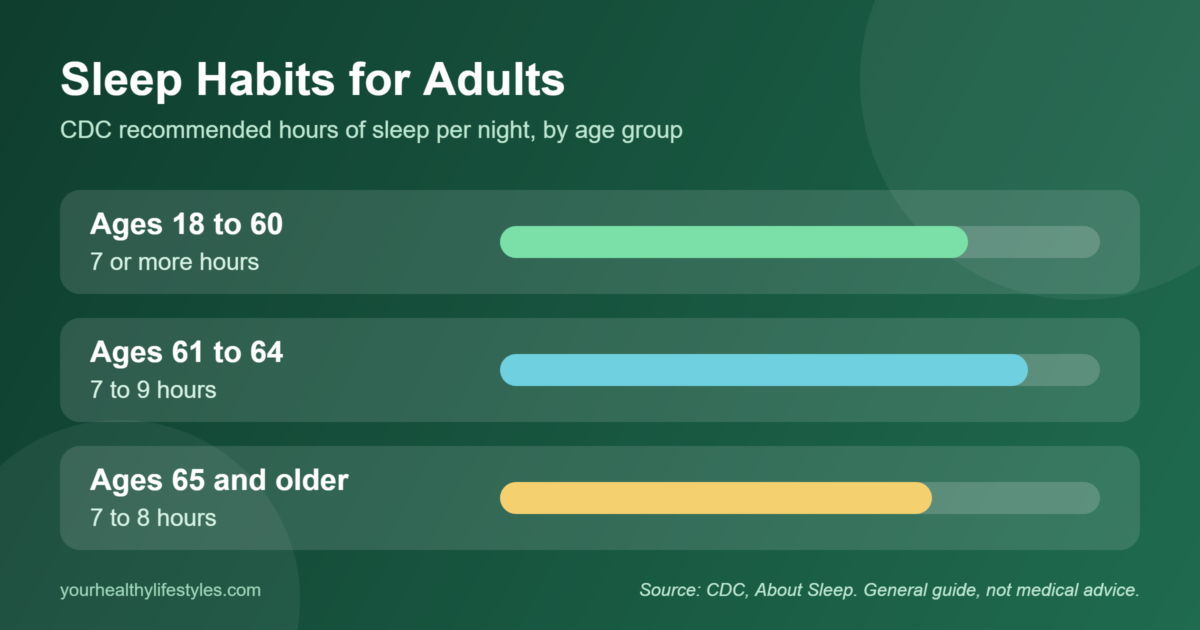
How much sleep do adults need?
The CDC gives these general ranges for sleep each night:
- Ages 18 to 60: 7 or more hours
- Ages 61 to 64: 7 to 9 hours
- Ages 65 and older: 7 to 8 hours
Use these ranges as a starting point for your own sleep habits for adults. These are general guides, not rules for every person. If you often feel tired during the day even after enough hours in bed, it is worth asking your doctor why.
8 sleep habits for adults backed by the CDC and NHLBI
1. Keep a steady sleep schedule
The CDC advises going to bed and getting up at the same time every day. The NHLBI adds that weekend changes should stay within about an hour. A steady wake-up time is often the easiest place to start because it anchors the rest of your day.
2. Make your bedroom quiet, cool and dark
Both agencies point to the bedroom. The CDC suggests a quiet, relaxing room at a cool temperature, and the NHLBI says to keep it quiet, cool and dark. A dim night light is fine if you need one.
3. Turn off screens before bed
The CDC recommends turning off electronic devices at least 30 minutes before bedtime. The NHLBI suggests avoiding bright artificial light, such as a TV or computer screen, in the hour before sleep because it may signal your brain to stay awake. If you can give yourself the full hour, even better.
4. Cut off caffeine early
According to the NHLBI, the effects of caffeine can last up to 8 hours, so a late afternoon coffee can make it harder to fall asleep at night. The CDC also recommends avoiding caffeine in the afternoon or evening. Remember that tea, cola and some energy drinks contain caffeine too.
5. Limit alcohol and large meals at night
The CDC recommends avoiding large meals and alcohol before bedtime, and the NHLBI also suggests avoiding alcoholic drinks before bed. A lighter evening meal gives your body a calmer start to the night.
6. Keep naps short
The NHLBI says adults should nap for no more than 20 minutes, and earlier in the day if nighttime sleep is difficult. Long or late naps can make it harder to fall asleep when bedtime arrives.
7. Stay active and get outside
The CDC lists regular exercise and a healthy diet as habits that support sleep. The NHLBI recommends spending time outside every day, while avoiding intense exercise during the quiet hour before bed. A morning or afternoon walk is an easy way to do both. For safe ways to build muscle, see strength training for older adults.
8. Build a calm wind-down routine
The hour before bed works best when it is quiet and low in light. Many people choose reading a paper book, gentle stretching or a warm shower. The goal is not a perfect routine. It is a repeatable signal to your body that the day is ending.
A simple 7-day plan to build better sleep habits for adults
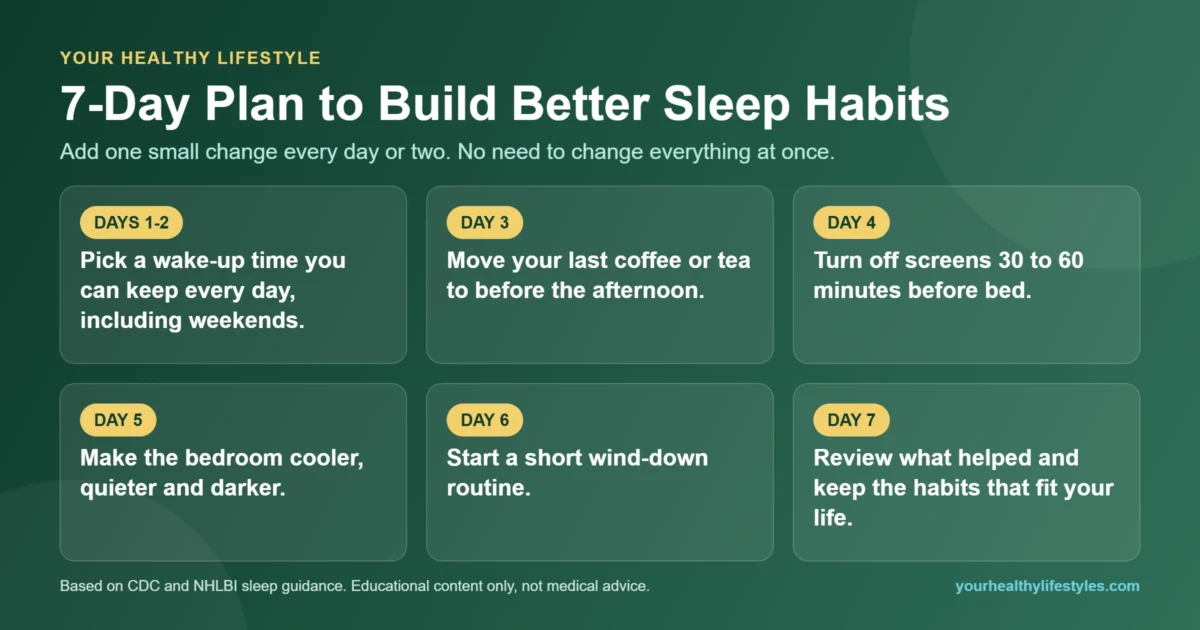
Changing everything at once rarely lasts. Try adding one change every day or two:
- Days 1 and 2: Pick a wake-up time you can keep every day, including weekends.
- Day 3: Move your last coffee or tea to before the afternoon.
- Day 4: Turn off screens 30 to 60 minutes before bed.
- Day 5: Make the bedroom cooler, quieter and darker.
- Day 6: Start a short wind-down routine.
- Day 7: Review what helped and keep the habits that fit your life.
Can sleep tracking apps support better sleep habits for adults?
A sleep tracking app can help you notice patterns, such as how bedtime, caffeine or screen time relate to how you feel the next morning. Keep in mind that many apps estimate sleep from movement or sound, so the numbers are estimates and not a medical test. If you try one, look for these features:
- A simple sleep log you can review each week
- A gentle alarm and a consistent bedtime reminder
- Calming sounds or relaxation audio, if you like them
- Clear privacy settings that explain how your data is used
Use an app as a helper for your sleep habits for adults, not as a source of worry. If a tracker makes you anxious about your numbers, take a break from it.
Supplements and sleep: what to know first
You may see supplements marketed for sleep. Habits come first, and supplements are not a substitute for them. If you are curious, read our guides to magnesium and ashwagandha for stress and sleep, and talk to your doctor before trying any new supplement.
When to talk to a doctor
If better sleep habits for adults do not help, ask a health professional for advice. Also ask if you have loud snoring with pauses in breathing, long-lasting trouble falling or staying asleep, or strong daytime sleepiness even after 7 or more hours in bed. These signs can have many causes, and a doctor can help find out what is going on.
Frequently asked questions about sleep habits for adults
How many hours of sleep do adults over 65 need?
The CDC recommends 7 to 8 hours of sleep for adults 65 and older.
Is it bad to take naps?
Short naps can fit into a healthy routine. The NHLBI advises adults to nap for no more than 20 minutes and to nap earlier in the day if nighttime sleep is hard.
What time should I stop drinking caffeine?
The CDC says to avoid caffeine in the afternoon or evening. Because the NHLBI notes that caffeine effects can last up to 8 hours, many people do best with a morning-only habit.
Your next step
Pick one of these sleep habits for adults and keep it for a week. Most people start with a steady wake-up time or an earlier screen cutoff. Write down how you feel each morning, then add the next habit. If sleep problems continue, bring your notes to your next appointment.
Related articles
- Magnesium Guide: Best Foods, Supplement Types and Safe Doses
- Ashwagandha for Stress and Sleep: Benefits, Dosage and Safety
- Supplement Guide
Sources
About the author: Reginaldo Encarnacao is an independent health writer who researches public sources such as the National Institutes of Health (NIH). He is not a doctor, pharmacist or dietitian.
Medical disclaimer: The information on this page is for educational purposes only and is not intended to diagnose, treat, cure or prevent any disease. Statements about dietary supplements have not been evaluated by the Food and Drug Administration. Individual results vary. See our full disclaimer.