

Strength Training for Older Adults: A Safe, Simple Plan
Strength training for older adults is one of the weekly activities that the CDC recommends, yet many people never start because they are not sure how. This beginner guide explains what CDC and National Institute on Aging (NIA) guidance says, shows a simple routine you can do at home, and covers the safety steps to take first.

Health note: This article is for general education only. It is not medical advice and it does not replace care from your doctor. Foods and supplements are not a substitute for prescribed treatment. Talk to a licensed health professional before changing your diet, medicines or supplements, especially if you are pregnant, take prescription drugs or have a chronic condition.
What do the guidelines say about strength training for older adults?
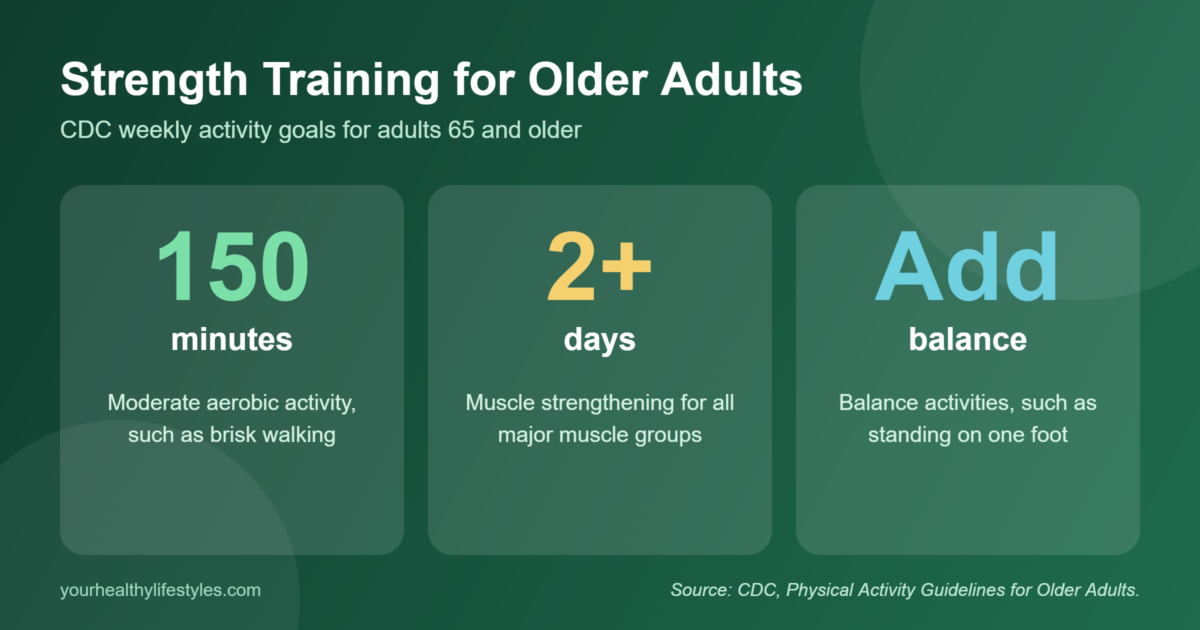
The CDC recommends that adults 65 and older get these amounts of activity each week:
- Aerobic activity: at least 150 minutes at moderate intensity, such as 30 minutes a day, 5 days a week
- Muscle-strengthening activity: at least 2 days a week
- Balance activities: included each week, such as walking heel-to-toe or standing up from a seated position
The NIA explains that muscle-strengthening exercises make your muscles contract, often by lifting against gravity, and should work your major muscle groups. In other words, strength training for older adults does not need a gym. A sturdy chair, a wall and a resistance band can be enough to start.
How often should you do strength training?
The NIA says to do muscle-strengthening activities at least two days per week and to avoid working the same muscle group on two days in a row. A simple pattern for strength training for older adults is Tuesday and Friday, with easier activity such as walking on other days. One set of 8 to 12 repetitions of each exercise is effective, according to the NIA, and more sets may help more once you feel comfortable.
Beginner strength training for older adults: a routine you can do at home
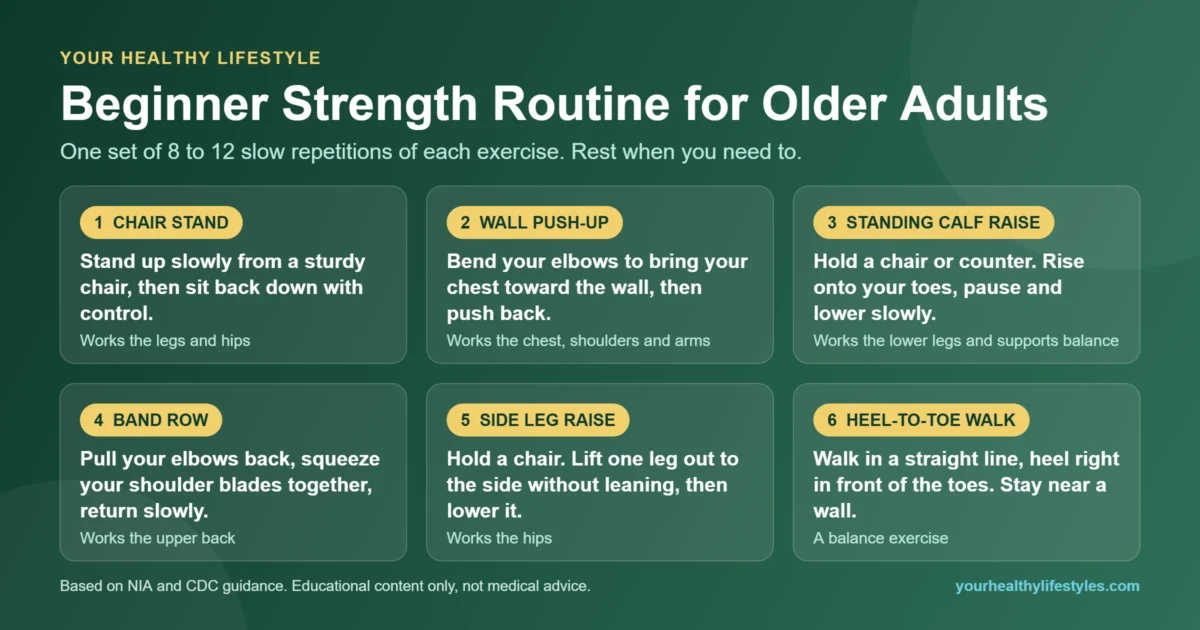
Here is a gentle full-body routine. Do one set of 8 to 12 repetitions of each exercise, rest when you need to, and move slowly. Start with no weights or bands until the movements feel comfortable, as the NIA suggests.
1. Chair stand
Sit near the front of a sturdy chair with your feet flat. Stand up slowly, then sit back down with control. Use your hands for support at first if you need to. This works the legs and hips.
2. Wall push-up
Stand an arm’s length from a wall and place your hands on it at shoulder height. Bend your elbows to bring your chest toward the wall, then push back. This works the chest, shoulders and arms.
3. Standing calf raise
Hold the back of a chair or a kitchen counter. Rise onto your toes, pause, and lower slowly. This works the lower legs and supports balance.
4. Band row
Sit tall with a resistance band looped around your feet or a door anchor. Pull your elbows back and squeeze your shoulder blades together, then return slowly. This works the upper back.
5. Side leg raise
Stand behind a chair for support. Lift one leg out to the side without leaning, then lower it slowly. Repeat on the other side. This works the hips.
6. Heel-to-toe walk
This is a balance exercise from the CDC examples. Walk in a straight line by placing the heel of one foot directly in front of the toes of the other. Stay near a wall or counter for safety.
New to strength training for older adults? Start with the first three moves.
How to breathe and progress safely
The NIA says not to hold your breath during strength exercises. Breathe out during the effort and breathe in as you relax. Warm up first, and listen to your body, since overdoing muscle-strengthening exercises can cause exhaustion, sore joints, and muscle pain or injury.
When the routine feels easy, increase the challenge gradually. The NIA lists three ways: add a little more weight, add sets or repetitions, or add another day each week. Change only one thing at a time.
Can a workout app support strength training for older adults?
For some people, a workout app makes it easier to follow a plan and track progress. If you try one, check that it fits the safety steps above. Look for these features:
- Beginner levels with clear video or picture demonstrations of each movement
- A log for repetitions and weights, so you can progress gradually
- Planned rest days, so you do not train the same muscles two days in a row
- Options to swap exercises if a movement bothers a joint
- Clear privacy settings and pricing before you subscribe
An app is a tool, not a coach who knows your health history. If a program pushes you faster than feels comfortable, slow down or choose a different one.
Recovery, sleep and food
Strength training for older adults works best with rest and good habits around it. Read our guide to sleep habits for adults to plan your recovery nights. If you are curious about nutrition, our guides on magnesium and beets and blood pressure explain what research shows, and your doctor can tell you what fits your health.
Frequently asked questions about strength training for older adults
How many days a week should older adults lift weights?
The CDC and NIA both point to at least 2 days a week of muscle-strengthening activity. The NIA adds that you should not work the same muscle group on two days in a row.
How many repetitions should I do?
The NIA says one set of 8 to 12 repetitions of each exercise is effective. Add sets later if you feel comfortable.
Do I need weights to start?
No. The NIA suggests beginners try exercises without weights or resistance bands until they are comfortable with the movements.
Who should I ask if I am unsure about an exercise?
The NIA advises seeking guidance from your doctor or a physical therapist if you are unsure about a particular movement.
Your next step
Start strength training for older adults the easy way: choose two non-consecutive days this week and try the first three exercises for one set each. Write down how you felt afterward. If everything feels comfortable, add the rest of the routine next week. If you have health concerns, ask your doctor or physical therapist before you start.
Related articles
- Sleep Habits for Adults: 8 Tips Backed by the CDC and NIH
- Magnesium Guide: Best Foods, Supplement Types and Safe Doses
- Beets and Blood Pressure: What Nitrate Research Shows
Sources
- CDC: Physical Activity Guidelines for Older Adults
- NIA: Three Types of Exercise Can Improve Your Health and Physical Ability
About the author: Reginaldo Encarnacao is an independent health writer who researches public sources such as the National Institutes of Health (NIH). He is not a doctor, pharmacist or dietitian.
Medical disclaimer: The information on this page is for educational purposes only and is not intended to diagnose, treat, cure or prevent any disease. Statements about dietary supplements have not been evaluated by the Food and Drug Administration. Individual results vary. See our full disclaimer.